In 2026, global packaging buyers are evaluating PVC Shrink Film Roll products with greater care. Cost matters, but it cannot stand alone. Film clarity, shrink performance, sealing strength, and storage stability directly influence production results. A suitable roll should match the package shape, machine temperature, line speed, and printing requirements.
Clear PVC shrink film remains popular for bottles, boxes, and retail multipacks. Printed film supports stronger shelf recognition. Colored and opaque options can create a more distinctive appearance. Perforated film may improve air release during shrinking, especially around irregular containers. Different thicknesses also serve different needs. Thin rolls reduce material use, while thicker grades can provide improved durability and handling.
Real-world testing is essential. A film that performs well in one factory may wrinkle on another machine. Humidity, tunnel temperature, core size, and roll tension can change the outcome. Buyers should request technical data, sample rolls, and recent quality records before making a large purchase. Ask about shrink ratios in both directions. Check ink adhesion and seal consistency.
This guide compares the main types of PVC Shrink Film Roll available to international buyers in 2026. It considers practical applications, performance differences, supplier communication, and quality risks. Some categories overlap. That is normal. Product labels are not always consistent across markets, so careful verification remains necessary. A lower price may look attractive, yet unstable shrinking can increase waste, downtime, and customer complaints. Reliable decisions require evidence, not attractive specifications alone.
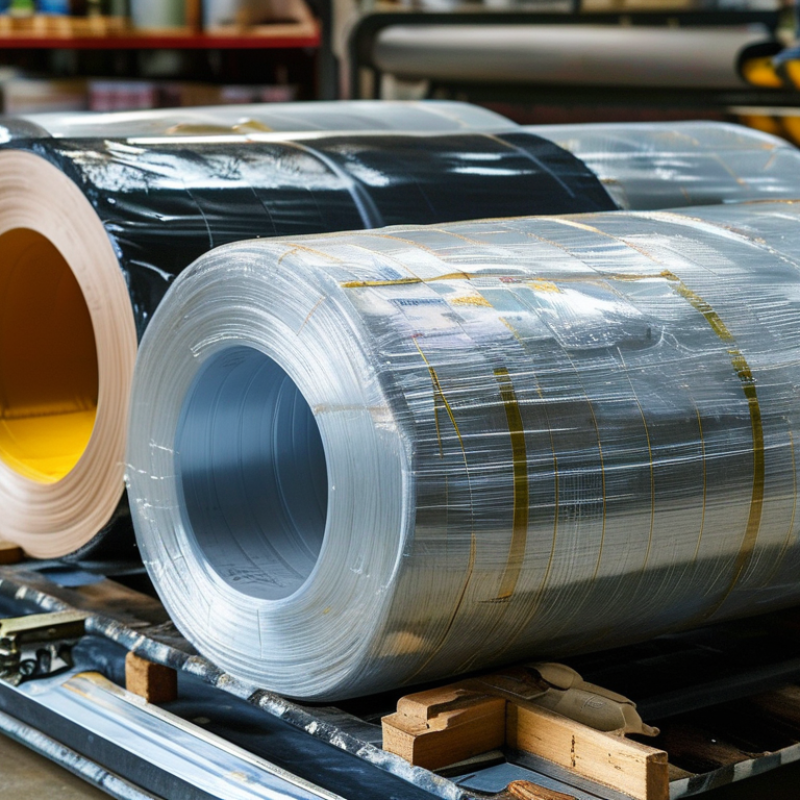
PVC shrink film roll is a thermoplastic packaging material supplied in continuous reels. Heat activates its molecular memory. The film then contracts around a product, creating a close, protective wrap. The change is easy to see: loose film becomes smooth around corners and edges. Not magic. It is controlled heat and tension. Common roll types include clear, colored, printed, perforated, single-wound, and center-folded films. Each format affects sealing speed, visibility, and material consumption.
Smithers reported that the global packaging market exceeded USD 1 trillion in 2023. The report also expects continued growth through 2028. Meanwhile, the OECD’s Global Plastics Outlook recorded about 460 million tonnes of plastic production in 2019. Packaging created around 40% of plastic waste. These figures make film efficiency increasingly important for global buyers. A practical specification should state thickness, shrink ratio, roll width, core size, winding direction, and recommended temperature. PVC can provide strong clarity and reliable shrinking. However, excessive heat may cause haze, distortion, or brittle seams.
During operation, the roll unwinds through a cutting or sealing station. A heat tunnel then contracts the film around the packed item. Uneven airflow leaves wrinkles or loose corners. In production checks, operators often find that small gauge differences change sealing results. The process is repeatable, but never perfectly forgiving. Buyers should request test rolls before approving bulk production. They should also verify odor, print adhesion, roll telescoping, and recycling instructions. A technically correct film can still fail when machine settings, product shape, or storage humidity are ignored.
PVC shrink film rolls serve different packaging needs, and the right type depends on product shape, equipment, and presentation goals. Clear PVC shrink film is widely used for cartons, gift packs, and bundled products. It offers good visibility and reliable sealing. Colored or opaque film helps protect light-sensitive items and creates a stronger shelf appearance. Printed PVC film can carry graphics directly, reducing the need for separate labels.
Perforated PVC shrink film allows controlled air release during heating. This feature helps reduce bubbles and uneven shrinking around curved products. High-shrink grades suit containers with narrow necks, handles, or complex contours. Some buyers also choose low-shrink film for simple boxes and stable product bundles.
Film thickness, shrink ratio, roll width, and core size must match the packaging machine. Small mismatches can cause wrinkles, weak seals, or wasted material. I have found that laboratory data alone is not enough. A short production trial often reveals problems earlier.
Tips:
Ask for recent technical data, sample rolls, and batch consistency records. Test the film at actual tunnel temperature and conveyor speed.
Check clarity, sealing strength, odor, and shrink uniformity. For regulated applications, request suitable compliance documents before purchase.
Do not assume the cheapest roll performs best. Total cost includes downtime, rejected packs, and operator adjustments.
For global buyers, PVC shrink film selection starts with material consistency, not appearance. Smithers’ 2024 packaging outlook identifies lightweighting and downgauging as continuing industry priorities. In practice, PVC film commonly ranges from 25 to 60 microns. Thicker grades support irregular shapes and sharper handling. Lower thickness reduces material use, but it can expose weak seals, pinholes, and tearing during transport. This trade-off is easy to underestimate.
Shrinkage must be specified in both machine direction and transverse direction. Typical PVC grades deliver roughly 40–55% machine-direction shrinkage and 0–10% transverse shrinkage. Results depend on formulation and testing conditions. Ceresana’s flexible packaging market research shows packaging remains a major plastics application, supporting demand for efficient, lightweight films. However, market data cannot replace a line trial. Real lines disagree.
Buyers should request thickness tolerance, shrink temperature, shrink force, haze, tensile strength, and seal strength. ASTM D2732 is commonly used to measure free shrinkage, but test temperature and conditioning must be recorded. A film rated at 90°C may behave differently in a tunnel operating near 120°C. For bottles, 45–50 microns may balance clarity and handling. Bundled or sharp-edged products may need 60 microns or more. This is only a starting point. Product geometry, airflow, and print coverage can shift the result. I would not approve a full order from a data sheet alone.
Matching PVC shrink film rolls to packaging uses requires more than choosing the lowest price. Grand View Research estimated the global shrink film market at over US$7 billion in 2023, with continued growth expected through 2030. That growth reflects demand for tamper visibility, shelf presentation, and compact bundled packs. Yet film selection still begins with the product, not the market forecast.
For clear bottles, stationery, and small retail packs, standard transparent PVC film usually offers strong clarity and reliable shrinking. Choose thinner rolls, around 30–50 microns, for light products and smooth surfaces. Heavier cartons may need 50–75 microns for better puncture resistance. Perforated film can reduce trapped air around irregular shapes. High-shrink grades suit curved containers, but excessive shrink force may crush thin boxes.
A practical trial matters. Set the tunnel near the supplier’s recommended range, then inspect corners, seams, and labels. ASTM D2732 testing can help compare free-shrink performance between rolls. The neatest film is not always the best choice. Some operators select high-shrink material too quickly, creating wrinkles or distorted graphics. I would also question PVC when recycling targets are strict. Smithers’ packaging outlook reports continuing pressure for lighter and more recyclable materials. That pressure may affect purchasing decisions before 2026. Record film thickness, shrink temperature, line speed, and rejection rate during testing. Small production differences often expose a poor match.
How to Match PVC Shrink Film Rolls With Packaging Uses
The chart shows indicative commercial thickness ranges for PVC shrink film rolls. Thinner films are commonly used for tamper-evident bands and small labels, while thicker films generally provide greater durability for multipacks and irregular-shaped containers. Final selection should also consider product geometry, shrink tunnel settings, sealing requirements, and transport conditions.
2026 Top Types of PVC Shrink Film Roll for Global Buyers
Global buying now depends on measurable quality, not attractive samples. Clear PVC shrink film suits bottles and gift packaging, while white film improves color coverage. Printed rolls need accurate registration and stable ink adhesion. According to PlasticsEurope’s 2024 industry report, global plastics production reached 413.8 million tonnes in 2023. This scale makes traceability and responsible material selection increasingly important. Smithers’ 2024 flexible packaging research also highlights downgauging, efficiency, and recyclability as key purchasing pressures.
A reliable supplier should provide thickness tolerance, shrinkage data, tensile strength, haze, sealing temperature, and batch records. Ask for a certificate of analysis for every production lot. Then test samples on the actual packaging line. A film may shrink evenly in a laboratory but wrinkle around sharp shoulders during production. That happened in one practical trial I reviewed. The sample looked excellent, yet its cross-direction shrinkage was unstable.
Buyers should check roll hardness, telescoping, edge damage, core size, and storage conditions. ASTM D1003 can support haze testing, while ASTM D882 helps evaluate tensile properties. ISO 2859-1 offers a structured sampling approach for incoming inspection. Do not accept “premium quality” without figures. For food-contact applications, request current compliance documentation for the destination market. Supplier selection should include technical response time, complaint handling, and retained samples. Price still matters, but an inexpensive roll can create more waste, downtime, and rework. Perfect consistency is difficult. That is why documented limits matter more than confident promises.
| PVC Shrink Film Type | Typical Thickness | Indicative Shrinkage Range | Recommended Applications | Key Performance Requirements | Common Buyer Quality Checks | Relevant Test Methods or References | Supplier Selection Criteria |
|---|---|---|---|---|---|---|---|
| Clear General-Purpose PVC Shrink Film | 30–60 μm | MD: 35–55% TD: 45–65% |
Multipacks, household products, stationery, small consumer goods, and tamper-evident overwraps. | Good transparency, stable web handling, balanced shrinkage, adequate puncture resistance, and low blocking. | Check thickness uniformity, haze, gloss, seal strength, shrink appearance, wrinkles, gels, pinholes, and roll telescoping. | ASTM D1003 for haze; ASTM D882 or ISO 527 for tensile properties; ISO 4593 for thickness. | Stable production records, complete technical data sheet, retained samples, batch traceability, and documented corrective-action procedures. |
| High-Shrink PVC Film | 40–80 μm | MD: 45–65% TD: 55–70% |
Irregularly shaped products, promotional bundles, bottles, and packages requiring close conformity. | High free-shrink response, controlled shrink force, strong recovery, and resistance to tearing during heat application. | Run a production-line trial; measure shrinkage at the specified temperature and dwell time; inspect corners, seams, and label distortion. | Free-shrink testing by an agreed internal or laboratory method; ASTM D882 or ISO 527 for tensile strength and elongation. | Supplier must provide shrink curves, recommended tunnel settings, process limits, and samples from the intended production grade. |
| Low-Temperature Shrink PVC Film | 35–70 μm | MD: 35–55% TD: 45–65% |
Heat-sensitive packaging, thin-walled containers, and operations designed to reduce thermal exposure. | Effective shrinkage at lower operating temperatures, short heat exposure time, good clarity, and limited substrate deformation. | Confirm minimum effective shrink temperature, seal integrity, shrink force, odor, and product-surface compatibility. | Supplier-defined shrink-temperature profile; ASTM D882 or ISO 527; visual inspection after simulated heat exposure. | Require documented processing windows, trial support, heat-setting guidance, and evidence of consistent performance across batches. |
| PVC Sleeve-Grade Film | 35–60 μm | TD: 55–70% MD: 30–50% |
Full-body labels, tamper bands, container decoration, and contoured packaging. | High transverse shrinkage, controlled machine-direction shrinkage, good print receptivity, and clean cutting performance. | Check shrink orientation, lay-flat width, coefficient of friction, print adhesion, seam quality, and registration stability. | ASTM D1894 for coefficient of friction; ASTM D1003 for haze; ISO 4593 for thickness; agreed print-adhesion test. | Select suppliers with sleeve-film converting experience, dimensional-control records, and verified compatibility with the customer’s printing process. |
| Printable PVC Shrink Film | 40–70 μm | MD: 30–55% TD: 45–65% |
Decorative labels, promotional packaging, tamper-evident bands, and branded graphics produced by the buyer. | Consistent surface energy, low surface defects, ink adhesion, dimensional stability, and controlled gloss or haze. | Test corona treatment or surface energy, ink adhesion, color consistency, blocking, winding quality, and print registration. | ASTM D3359 may be used for coating adhesion where applicable; ASTM D1003 for haze; ASTM D1894 for friction. | Require print trials using the buyer’s ink system, surface-treatment level, storage conditions, and converting equipment. |
| Perforated PVC Shrink Film | 40–80 μm | Usually similar to the parent film grade; verify after perforation. | Ventilated multipacks, easy-open packaging, bundled products, and applications requiring controlled tear initiation. | Uniform perforation pitch, predictable tear path, adequate residual strength, and stable shrink behavior after perforation. | Measure perforation spacing, inspect missing or oversized perforations, test tear force, and check breakage during transport simulation. | ASTM D882 or ISO 527 for tensile properties; buyer-defined tear and transport tests; ISO 4593 for thickness. | Confirm perforation tooling capability, inspection frequency, roll identification, and change-control procedures. |
| Opaque or Colored PVC Shrink Film | 40–80 μm | MD: 35–60% TD: 45–65% |
Light-sensitive packaging, visual differentiation, security bands, and products requiring reduced transparency. | Uniform color, opacity, consistent shrinkage, pigment dispersion, and resistance to scuffing or color transfer. | Check color difference against an approved standard, opacity, surface rub resistance, shrink uniformity, and odor. | ASTM D1003 for haze where applicable; ASTM D882 or ISO 527; buyer-agreed color measurement and rub-resistance methods. | Require master color standards, pigment compliance documentation, retained reference rolls, and lot-to-lot color-control data. |
| Food-Contact-Intended PVC Shrink Film | 30–60 μm | Application- and formulation-dependent; commonly MD: 35–55%, TD: 45–65%. | Food packaging only when the film, additives, inks, adhesives, and intended use comply with the destination-market requirements. | Migration compliance, odor control, seal performance, clarity, and suitability for the stated food type, temperature, and contact duration. | Review declarations of compliance, migration test reports, formulation controls, allergen information, and traceability documentation. | Applicable regulations depend on the destination market; use accredited laboratories and the current legal requirements for the intended use. | Do not accept a general “food grade” claim alone; verify legal status, test scope, intended conditions, and change-notification controls. |
: It is a continuous plastic film wound around a core. Heat makes it contract around a product.
The film passes through a sealing area and then a heated tunnel. Controlled heat tightens it around corners and edges.
Clear film suits cartons and gift packs. Colored film protects light-sensitive products. Perforated film helps release trapped air.
High-shrink film suits handles, narrow necks, and curved shapes. Low-shrink film works better for simple boxes.
Confirm thickness, shrink ratio, roll width, core size, winding direction, and heating range.
Uneven airflow, incorrect temperature, or poor product alignment may cause them. Small gauge differences matter.
Use a sample roll on the actual machine. Match the real tunnel temperature and conveyor speed.
Check clarity, odor, sealing strength, print adhesion, shrink uniformity, and roll telescoping. Laboratory data helps, but it is not enough.
Not necessarily. Downtime, rejected packs, wasted film, and operator adjustments can increase the real cost.
Review storage humidity, batch consistency, recycling guidance, and relevant application documents. A technically correct film can still fail.
A Pvc Shrink Film Roll is a thermoplastic packaging material that contracts when exposed to controlled heat, forming a close, protective layer around products. This article explains how shrink film works and introduces major roll types for global buyers, including general-purpose, high-clarity, printed, perforated, and specialty options. It also reviews important specifications such as PVC composition, thickness, roll width, shrinkage rate, clarity, strength, and sealing performance, helping buyers compare products according to packaging requirements.
The guide further shows how to match Pvc Shrink Film Roll products with applications such as gift sets, printed cartons, household goods, stationery, and other consumer packaging. It also covers practical purchasing standards, including dimensional accuracy, consistent shrinkage, surface quality, odor control, packaging protection, sample testing, production capacity, documentation, and supplier communication. By evaluating both technical performance and supply reliability, global buyers can select suitable film rolls for efficient, secure, and consistent packaging operations.

DongFa Printing