Choosing the right Polypropylene Strapping Roll begins with the load, not the label. A roll that looks strong may still fail around sharp cartons, uneven pallets, or cold warehouse floors. The correct choice depends on tensile strength, elongation, width, thickness, core size, dispenser compatibility, and sealing method.
Industry data supports careful selection. Smithers’ The Future of Global Packaging to 2028 identifies efficiency, material reduction, and recyclable formats as major packaging priorities. Mordor Intelligence also reports continued growth in automated packaging equipment, especially in logistics, food, beverage, and manufacturing. These trends increase demand for consistent strapping performance. They also expose weak purchasing decisions quickly.
Packaging specialist Lisa McTigue Pierce has expressed a practical principle: “Good packaging protects the product while using resources responsibly.” That idea fits polypropylene strapping well. Lightweight material matters, but stability matters more. A softer strap may work for bundled newspapers. It may not hold dense construction materials during long-distance transport.
The details are physical. Imagine a pallet moving across a vibrating truck floor. The strap should remain tight without cutting into the carton. Its surface should feed smoothly through the machine. Its weld should survive handling, not merely pass a showroom test.
No roll is perfect. I would not trust a glossy specification alone. Ask for test results, production consistency, recommended applications, and samples under real conditions. Check recycled content claims carefully. Compare actual break strength, not marketing language. The right Polypropylene Strapping Roll is the one that performs reliably, reduces waste, and matches the equipment already operating on your floor.
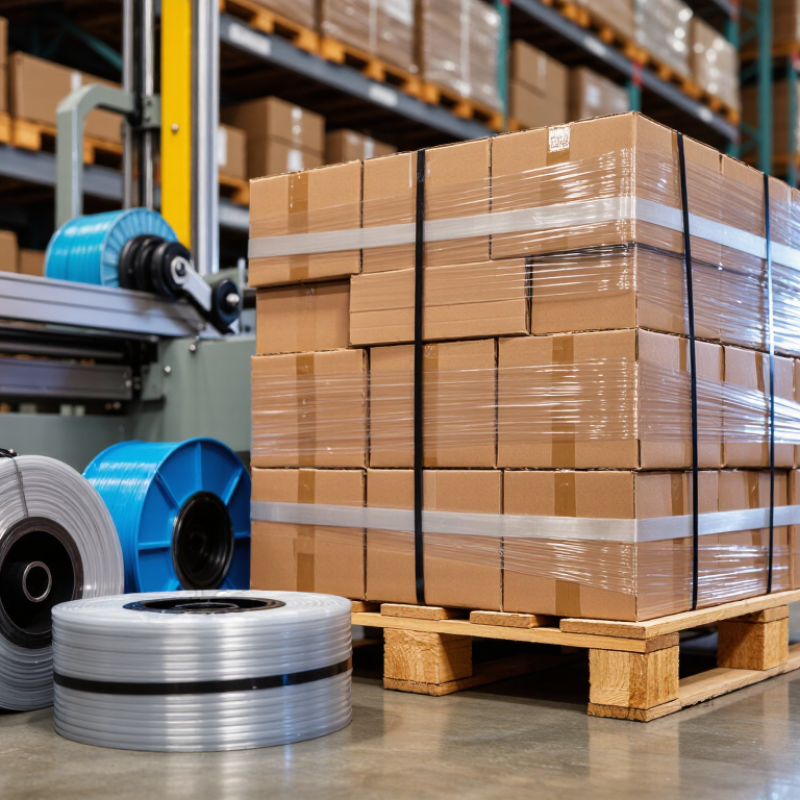
How to Choose the Right Polypropylene Strapping Roll
Polypropylene strapping comes in widths from 5 to 19 mm and thicknesses from 0.45 to 1.20 mm. These dimensions directly affect holding strength, flexibility, and machine performance. Narrow 5–9 mm strap suits light cartons, bundled newspapers, and small retail packages. Wider 12–19 mm strap offers better load distribution for larger boxes and stacked products. However, width alone does not determine performance.
Thickness deserves closer attention. A 0.45–0.60 mm strap bends easily around small packages and works well with manual tools. Medium grades around 0.70–0.90 mm provide a practical balance for routine warehouse packing. Heavy loads may require 1.00–1.20 mm material, especially when cartons face vibration during transport. Thicker strap is not automatically safer. It may resist bending and exceed the tool’s sealing range.
Check the roll against the equipment before ordering. Confirm strap width, thickness, core size, and tension settings. A mismatch can cause feeding faults, weak seals, or uneven tension. Inspect the strap edge under good light. Clean, rounded edges are easier to handle and less likely to damage packaging. Store rolls indoors, away from direct sunlight and standing moisture. Test several packed cartons with the actual load. One trial is not enough. Carton shape, temperature, and operator technique can change results. A grade that worked yesterday may need adjustment today.
The specifications below are typical selection ranges for polypropylene strapping. Actual performance depends on resin formulation, extrusion quality, embossing, storage conditions, and joint method.
| Strap Grade | Width (mm) |
Thickness (mm) |
Cross-Sectional Area (mm²) |
Typical Break Force (N) |
Typical Elongation (%) |
Recommended Application | Common Joint Method |
|---|---|---|---|---|---|---|---|
| Light-Duty | 5 | 0.45 | 2.25 | 450–650 | 15–25 | Small cartons, printed materials, and lightweight bundling | Manual friction weld or small buckle |
| Light-Duty Plus | 9 | 0.55 | 4.95 | 1,000–1,400 | 15–25 | Retail cartons, magazines, textile bundles, and light parcels | Friction weld or metal/plastic buckle |
| General-Purpose | 12 | 0.60 | 7.20 | 1,500–2,000 | 15–25 | Corrugated boxes, parcel consolidation, and medium-weight loads | Automatic friction weld or buckle |
| General-Purpose Plus | 15 | 0.80 | 12.00 | 2,400–3,200 | 15–25 | Dense cartons, appliance packaging, and palletized goods | Friction weld or serrated metal seal |
| Heavy-Duty | 16 | 1.00 | 16.00 | 3,200–4,200 | 15–25 | Rigid cartons, building-material packs, and stable pallet loads | Powered friction weld or heavy-duty seal |
| Extra Heavy-Duty | 19 | 1.20 | 22.80 | 4,500–5,800 | 15–25 | Large, dense, or vibration-sensitive palletized loads | Powered friction weld or heavy-duty seal |
Match the strap to load behavior, not weight alone. Light cartons may need 80–120 kgf. Heavier bundles often need 150–250 kgf. Unstable loads may require 300–350 kgf. Shape matters.
Yes. A narrow, unstable bundle can shift more easily. A compact box may remain stable with less strength. Test the actual load before making a final choice.
Check tensile strength, width, thickness, and elongation. Confirm compatibility with the sealing tool. Manual, semi-automatic, and automatic tools may use different settings.
Pull the strap firmly. Do not crush the carton corners. Excessive tension can damage cardboard and reduce stability. Stronger is not always better.
Use them when sharp corners could cut the strap. They spread pressure across the carton edge. The small extra step can prevent visible damage.
Strap one sample load first. Move it across the real route. Check for loosening, cuts, and shifting. Recheck it after storage and vibration.
Heat welding may provide 80–95% joint efficiency. This depends on strap grade, thickness, temperature, pressure, and cooling time. The range is not guaranteed.
Cut the strap squarely and keep the surface clean. Dust, oil, and moisture can weaken the seam. Inspect the joint for even bonding and melted gaps. Try a simple pull test.
Check the strap and machine together. Adjust one setting at a time. More heat may create a brittle seam. I might blame the machine too quickly.
No. Higher strength can raise cost without solving poor tensioning. Load shape, joint quality, and handling conditions also matter. A practical test is wiser than a strong specification alone.
Choosing the right Polypropylene Strapping Roll requires matching its specifications to your packaging and handling needs. Start by assessing strap grade, including widths from 5 to 19 mm and thicknesses from 0.45 to 1.20 mm. Select tensile strength according to the load weight and transportation conditions, with options ranging from 80 to 350 kgf. Heavier or more demanding loads generally require stronger, thicker strapping for reliable support.
Roll length and core size should also suit your equipment and work volume. Common roll lengths range from 2,000 to 4,000 meters, while core diameters may range from 200 to 406 mm. Confirm that the strap works with your joining method, as heat welding can provide approximately 80–95% joint efficiency when properly applied. Finally, store the material in a dry, UV-protected environment at around 15–25°C to help preserve its strength, flexibility, and performance over time.

 DongFa Printing