Choosing the right Plastic Stretch Wrap Roll supplier is more complicated than comparing prices on a spreadsheet. Film thickness, puncture resistance, cling performance, load stability, and production consistency can vary sharply between manufacturers.
Packaging scholar Diana Twede is widely associated with the observation, “The package is the product.” Her point matters here. Stretch film is not merely a transparent covering. It protects cartons, reduces shifting, and influences warehouse efficiency during storage and transport.
This guide examines leading Plastic Stretch Wrap Roll suppliers worldwide through practical purchasing criteria. These include manufacturing capacity, quality-control systems, recycled-content options, export experience, and technical support. We also consider machine compatibility, because a film performing well in hand wrapping may fail on an automatic wrapper.
Small details matter.
A reliable supplier should provide measurable specifications, not vague claims. Buyers should request sample rolls, test film under real load conditions, and review batch consistency before signing large contracts. Independent certifications can strengthen confidence, but they do not replace practical testing.
The market is not perfectly transparent. Supplier rankings may change with resin costs, regional freight, energy prices, and capacity changes. Some companies communicate sustainability impressively, yet offer limited evidence about recycled content or lifecycle performance. That deserves careful questioning.
Our comparison aims to be useful rather than absolute. It combines technical evaluation, purchasing experience, and publicly available supplier information. Still, no shortlist can replace your own trial runs. A film that suits a cold warehouse may disappoint in humid conditions. That is an uncomfortable but important limitation.
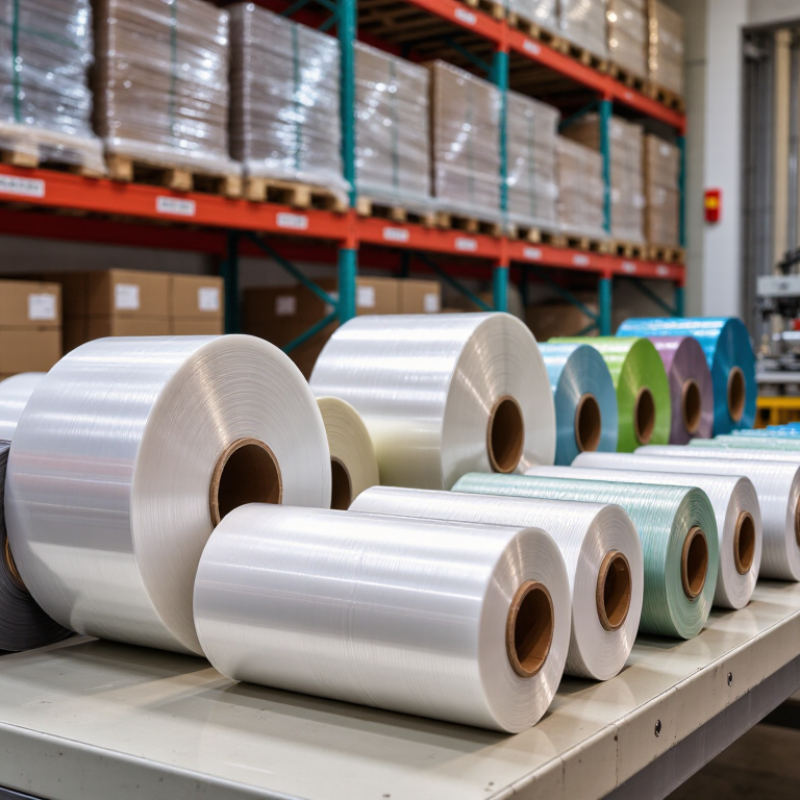
What Is Plastic Stretch Wrap and How Is It Used?
Plastic stretch wrap is a thin, elastic film used to secure products during storage and transport. Most commercial film uses polyethylene, commonly linear low-density polyethylene (LLDPE). Its cling holds overlapping layers together, while tension keeps cartons from shifting. The film is not the same as shrink film. Stretch wrap tightens through pulling, not heat.
In a warehouse, an operator wraps from the pallet base upward, overlapping each pass by about half the film width. The bottom layers anchor the load, while upper layers bind cartons and reduce dust exposure. Corners need controlled tension, because excessive force can crush boxes. A pre-stretched roll requires less pulling and may improve consistency. Hand rolls suit occasional loads. Powered dispensers or wrapping machines help with repetitive pallets and measured tension. Clear film supports quick visual checks, while opaque film can conceal contents when appropriate.
Good results depend on load shape, carton strength, film gauge, and handling conditions. Cold storage, sharp edges, and uneven pallets can weaken performance. It is easy to overwrap a poor stack and mistake plastic for stability. That is a real mistake. A stable pallet should be squared, aligned, and tested before dispatch. Recyclability also deserves attention; used film should be kept clean and separated where local recovery systems accept it. Suppliers should provide technical data, test guidance, and honest limits rather than promise universal performance.
Key Factors for Evaluating Global Stretch Wrap Suppliers
Top Plastic Stretch Wrap Roll Suppliers Worldwide?
Choosing a global stretch wrap supplier requires more than comparing quoted prices. I have learned this during warehouse trials, where a cheap roll often failed at pallet corners. Evaluate film thickness, puncture resistance, cling, and load stability under real shipping conditions. Ask for technical data, then verify it with sample rolls. A specification sheet cannot show every handling problem. Test matters.
Supplier experience should be visible in quality records, production controls, and export documentation. Request batch numbers, inspection reports, and clear tolerances for thickness and tensile strength. Check whether production remains consistent during peak seasons. One excellent sample proves little. Production consistency matters more. Confirm lead times, pallet quantities, protective packaging, and storage requirements. Written procedures reduce disputes when rolls arrive damaged or late.
Technical support also separates dependable partners from simple traders. A capable team can recommend pre-stretch levels, machine settings, and suitable film grades for different loads. Their advice should fit your products, not merely increase consumption. Calculate total cost through film usage, breakage, labor, and freight. The lowest price may become expensive. Do not ignore sustainability claims. Request measurable recycled content, downgauging evidence, and disposal guidance. Some claims sound impressive but remain difficult to verify. Recheck them with documents and independent testing when the shipment is important.
Key Factors for Evaluating Global Stretch Wrap Suppliers
This benchmark compares commonly evaluated technical and supply factors for commercial stretch wrap. Higher values indicate stronger performance or broader capability, while the scores are normalized to a 100-point scale.
Leading Plastic Stretch Wrap Roll Suppliers by Region
Plastic stretch wrap roll suppliers vary by region, production scale, and packaging expertise. North American suppliers often support large warehouses with machine-grade rolls, consistent thickness, and strong load retention. They commonly provide technical guidance for pallet testing and film selection. European suppliers tend to focus on downgauged films, recyclable structures, and precise quality control. Their products may suit manufacturers tracking material use and packaging waste closely.
In Asia-Pacific, suppliers offer broad production capacity and competitive lead times. China, Japan, South Korea, and Southeast Asia serve electronics, food, furniture, and export packaging sectors. However, low pricing alone can mislead buyers. Film puncture resistance, cling performance, roll length, and core strength require verification.
A sample trial is more useful than a polished catalogue. In my experience, unstable film tension creates loose pallets, even when the roll appears professional.
Middle Eastern and African suppliers often serve regional distribution hubs, construction materials, and agricultural exporters. They may provide shorter delivery routes and flexible order quantities. Latin American suppliers commonly support food, beverage, and industrial packaging markets, where heat, dust, and long transport distances affect performance. Ask about storage conditions and batch traceability. Suppliers with laboratory testing, clear specifications, and responsive after-sales support are usually safer choices. No region is perfect. Even experienced buyers should review actual pallet results, because transport conditions can expose weaknesses that factory tests miss.
Product Types, Materials, and Customization Options
Worldwide stretch wrap suppliers now serve varied needs, from hand-applied pallet film to automated machine rolls. Product selection usually begins with film type. Cast film offers quiet unwinding and consistent thickness. Blown film provides stronger puncture resistance, especially around sharp cartons. Pre-stretch film can reduce operator effort, but it may not suit unstable loads.
Material choice matters. Most commercial stretch wrap uses linear low-density polyethylene, or LLDPE, because it combines elasticity with load retention. Recycled-content grades are gaining attention. Grand View Research valued the global stretch films market at about USD 3.1 billion in 2022 and projected continued growth through 2030. However, recycled content can change clarity, tear behavior, and machine settings. More sustainable does not always mean easier.
Customization separates capable suppliers from simple resellers. Buyers can request specific widths, roll lengths, gauges, colors, tack levels, and UV resistance. Core diameter and winding direction must match the wrapping equipment. According to Smithers’ market analysis, downgauging remains an important industry trend, with thinner films designed to maintain performance. A lower micron count is not automatically better. In practical testing, edge protection, pallet weight, temperature, and transport distance often matter more. I would request sample rolls and compare force-to-load, puncture resistance, and cling before placing a large order. Small mistakes become expensive quickly.
How to Select the Right Stretch Wrap Supplier for Your Needs
Choosing the right stretch wrap supplier requires more than comparing roll prices. Grand View Research estimates the global stretch films market will grow steadily through 2030, driven by logistics, food distribution, and industrial packaging. This growth brings more suppliers, but quality can vary sharply.
Ask each supplier for measurable specifications. Check film thickness, puncture resistance, elongation, load retention, and pre-stretch performance. A thinner roll is not automatically better. During warehouse trials, I would wrap identical pallets and inspect them after 24 and 72 hours. Loose corners, torn film, or shifting cartons reveal problems quickly. Suppliers should provide batch records, technical data sheets, and clear quality-control procedures. ISO 9001 certification can support reliability, but it cannot replace practical testing. I have learned that attractive samples sometimes perform poorly in cold storage. That detail is easy to overlook.
Tips: Request three trial rolls from different production batches. Measure actual length, not only stated weight. Confirm whether recycled content affects clarity or puncture strength. Review delivery capacity, minimum order quantities, and emergency lead times. Smithers’ report, The Future of Stretch and Shrink Films to 2028, highlights sustainability pressure across flexible packaging. Therefore, ask for verified material data instead of accepting vague environmental claims. A supplier should also explain recycling guidance for your region. Pricing still matters, but unstable film creates hidden labor costs, damaged goods, and repeated wrapping.
FAQS
Plastic stretch wrap secures cartons during storage and transport. It uses elastic tension, not heat. Overlapping layers cling together and reduce shifting.
Start near the pallet base and move upward. Overlap each pass by about half the film width. Anchor the lower layers firmly. Do not crush the corners.
No. A crooked stack remains risky under plastic. Square the cartons and align the pallet first. Plastic cannot replace proper stacking.
Compare thickness, puncture resistance, cling, and elongation. Check load retention during real handling. A thinner film is not automatically better. That assumption can become expensive.
Request several trial rolls from different production batches. Wrap identical pallets under similar conditions. Inspect them after 24 and 72 hours. Look for torn film, loose corners, and shifted cartons.
Yes, cold conditions can weaken performance. Sharp edges and uneven pallets create additional stress. Test the film in the actual storage environment. A warm warehouse test may mislead you.
Hand rolls suit occasional pallet wrapping. Powered dispensers help with repeated loads. Machines can control tension more consistently. They also require suitable settings and maintenance.
Ask for technical data sheets, batch numbers, and inspection records. Confirm thickness and tensile-strength tolerances. Review lead times, pallet quantities, packaging, and storage requirements. One attractive sample proves little.
Request measurable recycled-content data and disposal guidance. Keep used film clean and separated. Check whether local recovery systems accept it. Some environmental claims sound stronger than the evidence.
Conclusion
Plastic stretch wrap is a flexible packaging material used to secure, protect, and stabilize products during storage, handling, and transportation. A Plastic Stretch Wrap Roll can be applied by hand or with wrapping equipment, depending on load size and operational requirements. Its performance is influenced by film strength, stretch capacity, puncture resistance, cling properties, thickness, and transparency. Understanding these characteristics helps businesses choose packaging that reduces movement, protects goods from dust and moisture, and supports efficient warehouse processes.
When evaluating suppliers worldwide, buyers should consider manufacturing consistency, material quality, production capacity, delivery reliability, technical support, customization, and transparent communication. Suppliers may offer hand wrap, machine wrap, pre-stretched film, colored film, recycled-content options, and various widths or thicknesses. The best choice depends on product weight, pallet dimensions, shipping conditions, application method, budget, and sustainability goals. Comparing samples, specifications, certifications, lead times, and after-sales service can help customers select a dependable supplier suited to their practical packaging needs.

 DongFa Printing