Top Plastic Shrink Wrap Roll Manufacturers in China?

Time:2026-10-29 Author:Isabella
0%

Choosing a Plastic Shrink Wrap Roll manufacturer in China takes more than comparing prices. Film thickness, sealing consistency, clarity, and roll length can affect line speed and packaging quality. A roll may look fine on arrival, yet split at the seal or shrink unevenly under heat. Small details matter.

The broader packaging context is changing. The OECD’s Global Plastics Outlook reports that global plastic waste reached 353 million tonnes in 2019, with packaging representing about 40% of that waste. This figure covers plastic packaging broadly, not shrink film alone. Still, it highlights why buyers increasingly ask about material composition, recyclability claims, and production controls. Ellen MacArthur, a circular-economy expert, has called for us to “fundamentally rethink the way we make, use and reuse plastics.” Her point is relevant to shrink packaging: performance and end-of-life considerations both deserve attention.

This guide introduces leading Chinese manufacturers and practical ways to assess them. Look beyond catalog photos. Request technical data sheets, sample rolls, and clear answers about film structure and testing. Check whether stated tolerances match the needs of your equipment. Ask how suppliers handle defects and batch consistency. These steps do not guarantee a perfect purchase. They make comparisons more grounded. A low quote can hide real trade-offs. So can an impressive specification sheet. The goal is to find a supplier whose documented capabilities fit your product, packing line, and purchasing priorities.
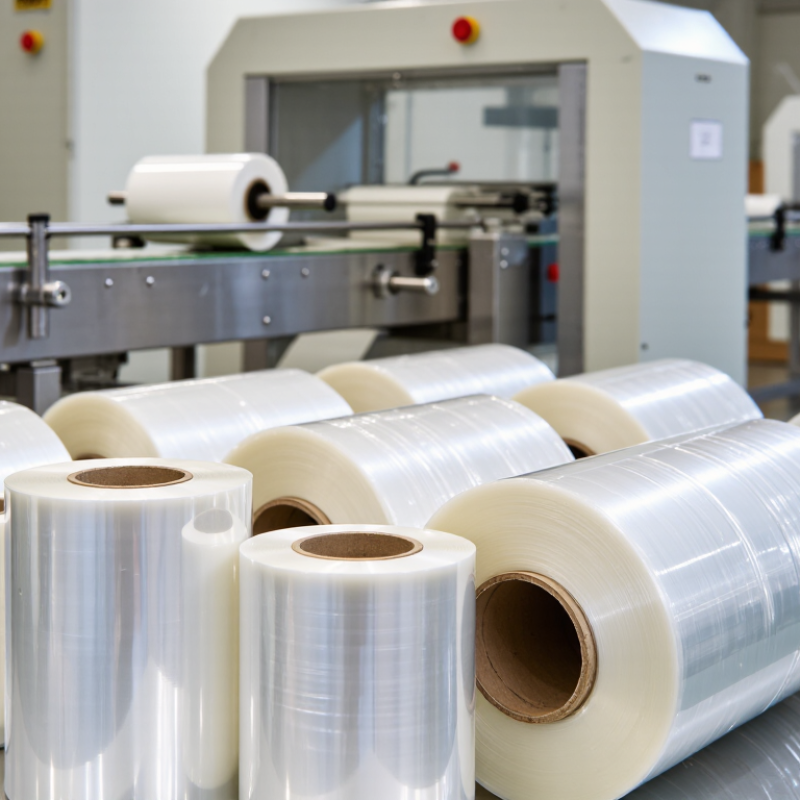
Top Plastic Shrink Wrap Roll Manufacturers in China?

Understanding Plastic Shrink Wrap Rolls and Their Applications

Plastic shrink wrap rolls are continuous films used to secure and display products. Common applications include bundling bottled drinks, protecting cartons, and creating tidy retail packs. Heat makes the film contract around the load. Small details matter: film thickness, roll width, shrink ratio, and sealing quality all affect handling and appearance. A roll that runs smoothly on one packing line may wrinkle or tear on another. It is a practical mismatch, and sometimes the specification looked fine on paper.

The wider packaging sector shows why these materials matter. PlasticsEurope’s Plastics – the fast facts 2023 report states that packaging represented 39.1% of European plastics demand in 2021. This figure covers packaging broadly, not shrink wrap alone, so it should not be treated as a shrink-film market share. For buyers comparing rolls, application conditions are more useful than market size: product shape, transport distance, and packing speed all influence film choice.

Tips: Test a short roll on the actual machine. Check seals, clarity, and package stability after cooling. Ask for consistent thickness data and a technical specification sheet. Do not choose by price alone; a cheaper film can create more waste or slow the line. Even careful testing cannot predict every change in temperature or operator handling.

How China’s Shrink Wrap Roll Industry Is Structured

China’s shrink wrap roll industry is built around several linked roles, not a single type of factory. Resin suppliers provide polyethylene materials, while film producers turn them into rolls using blown-film or cast-film processes. Some factories focus on extrusion; others also slit, rewind, or print film to match buyers’ packing lines. It is not one market.

Production is concentrated in manufacturing regions with access to packaging suppliers, transport links, and export ports. This can shorten lead times for common roll widths, though custom thicknesses or core sizes may take longer. A roll’s performance depends on more than its listed gauge. Film clarity, sealing behavior, stretch, and consistent winding all matter when it runs through an automated wrapper.

Trading companies and distributors sit between some factories and overseas buyers, while larger manufacturers may handle specifications and shipping directly. The distinction is not always obvious from a product listing. Buyers should request sample rolls and check test conditions, including film thickness and tensile measurements. Even then, results can vary between production batches; that detail deserves more attention than it often receives.

Key Criteria for Comparing Chinese Manufacturers

When comparing Chinese plastic shrink wrap roll manufacturers, start with measurable specifications, not catalogue claims. Ask for film thickness tolerance, roll weight, width variation, shrink ratio, and tensile or tear test results. Request the test method and recent batch records; a number without a method is hard to compare. Numbers matter.

The OECD’s Global Plastics Outlook (2022) estimated that 353 million tonnes of plastic waste were generated worldwide in 2019, with only 9% recycled. That figure makes material documentation worth checking. Ask whether the quoted resin is virgin, recycled, or a stated blend, and how the supplier verifies its composition. Also compare recycled-content claims with the relevant test evidence. Vague answers are a warning, even when the sample looks clear.

For production reliability, review quality-control procedures, lot traceability, lead times, and capacity during peak demand. Request samples from more than one batch, then test them on your own wrapping equipment: observe seal strength, load stability, and film breakage around sharp carton corners. Confirm that certificates are current and cover the actual factory and product, not just a trading office. One limitation: a short trial may not reveal seasonal variation, so follow-up checks matter. Price alone rarely tells the whole story.

Notable Plastic Shrink Wrap Roll Manufacturers in China

Notable plastic shrink wrap roll manufacturers in China tend to stand out through consistent film performance, export experience, and clear quality records. Buyers should compare film type, thickness tolerance, shrink behavior, and sealing performance—not just quoted price. Ask for technical data sheets and batch-specific inspection records. A roll that looks clear may still wrinkle on a fast packing line.

Industry context matters. The OECD’s Global Plastics Outlook (2022) reports that global plastics production reached 460 million tonnes in 2019, while packaging generated 142 million tonnes of plastic waste. These figures cover plastics broadly, not shrink film alone. They reinforce why material efficiency and waste reduction deserve attention. That matters. When assessing Chinese suppliers, request trial rolls and test them on the intended equipment, product shape, and temperature settings. Check whether the supplier can explain changes in film thickness, roll length, and storage conditions. A polished sample is not enough. I would also ask how often production lots are checked; supplier claims can sound precise, yet the supporting records may be thin.

Top Plastic Shrink Wrap Roll Manufacturers in China? — Notable Plastic Shrink Wrap Roll Manufacturers in China

This chart compares indicative shrinkage ranges for common shrink-film materials—not individual manufacturers or brands. Actual performance varies by film grade, direction of shrink, and test conditions.

How to Assess Product Quality and Export Readiness

A reliable assessment starts with the roll, not the sales sheet. Measure film thickness at several points across its width with a calibrated micrometer. Check for uneven edges, telescoping layers, pinholes, and loose winding. Then test a sample on the packaging line. Does it feed smoothly? Does it shrink evenly around a box without splitting at the corners? Record the temperature and speed settings; results can change when either shifts. Looks matter, but handling matters more.

Ask for test data on tensile strength, puncture resistance, and shrink performance, and confirm that the figures match the film grade being offered. Compare samples from more than one production lot. A single good roll proves little. I would also check whether the supplier can explain its testing method clearly. If measurements are inconsistent, ask for a retest rather than relying on a reassuring answer. No checklist catches everything.

Export readiness shows up in the details. Confirm roll dimensions, core size, net weight, carton protection, pallet layout, and lead time in writing. Request a sample shipping document set and make sure product descriptions and quantities agree across the paperwork. Ask how the supplier handles damaged rolls or production delays. Clear answers reduce surprises, though they cannot remove every risk. Allow time for a pre-shipment sample; skipping that step can be tempting when deadlines feel tight, but it is worth questioning.

Top Plastic Shrink Wrap Roll Manufacturers in China? - How to Assess Product Quality and Export Readiness

Assessment dimension Practical screening benchmark Evidence to request or verify Suggested weight
Product specification Film type, width, thickness, roll length, core size, color, and intended application are defined in writing before ordering. Signed specification sheet and approved pre-production sample. 15%
Thickness and dimensional consistency Measured thickness, width, and roll length match the agreed specification and contractual tolerances; no unexplained variation between samples. Inspection records showing measurement method, sample locations, and results from multiple rolls. 12%
Shrink performance Free shrink is tested at the agreed temperature and direction; the film performs consistently on the buyer’s product and equipment. Test report stating test temperature, machine/transverse direction, specimen method, and results. ASTM D2732 is one relevant method for free linear thermal shrinkage. 12%
Strength and handling Film withstands normal converting, wrapping, and transport without unacceptable tearing, puncturing, or seal failure for the intended use. Relevant tensile or impact test results and a packaging-line trial. ASTM D882 covers tensile properties of thin plastic sheeting; ASTM D1709 covers dart impact resistance. 10%
Appearance and roll quality Rolls are clean and evenly wound, with no visible contamination, blocking, telescoping, wrinkles, or damage that affects use. Pre-shipment photos, agreed defect limits, and a sample inspection from randomly selected finished rolls. 8%
Quality control system Incoming material, production, and finished-product checks are documented; non-conforming goods have a defined corrective-action process. Quality-control plan, recent inspection records, calibration records, and any current ISO 9001 certificate verified with its issuer. 12%
Production capacity and lead time The supplier confirms available capacity, minimum order quantity, production lead time, and peak-season schedule against the buyer’s order plan. Written production schedule, order-capacity confirmation, and recent on-time delivery data where available. 8%
Packaging and shipment protection Rolls are protected against moisture, dust, crushing, and handling damage; carton or pallet configuration suits the shipment and destination. Packaging specification, carton dimensions and gross weight, pallet plan if applicable, and loading photos. 8%
Export documentation readiness Supplier can prepare accurate commercial and shipping documents and coordinate document requirements with the buyer and freight forwarder. Sample commercial invoice and packing list; confirmation of bill-of-lading instructions and certificate-of-origin arrangements where required. Destination-specific rules should be checked before shipment. 10%
Communication and order control The supplier responds clearly to technical questions, confirms specification changes in writing, and identifies a contact for production and shipment updates. Response record, written order confirmation, and agreed process for handling changes or claims. 5%
Total suggested assessment weight 100%
Use these benchmarks as a supplier-screening framework, not as universal product limits. Final acceptance criteria should be agreed in the purchase specification and verified against the film type, application, equipment, and destination-market requirements.

FAQS

What is a plastic shrink wrap roll used for?

It is a continuous film used to bundle products, protect cartons, and create tidy retail packs. Heat makes it contract around the load.

Which details should buyers compare?

Compare film thickness, roll width, shrink ratio, sealing quality, and batch consistency. Small mismatches can cause wrinkles or tears.

How can I check whether a film suits my packing line?

Test a short roll on the actual machine. Check seals, clarity, and package stability after cooling. That matters.

Why might film wrinkle during packing?

Film behavior can change with machine speed, product shape, temperature, or handling. A clear-looking sample may still wrinkle on a fast line.

What should I request from a supplier?

Ask for a technical data sheet, thickness details, and batch-specific inspection records. Ask how often production lots are checked. Claims can sound precise.

Is the cheapest roll always the best choice?

Not always. Lower-priced film may create more waste or slow the packing line. Price alone tells very little.

What should I consider when choosing film for transport?

Consider product shape, transport distance, and packing speed. Check package stability after cooling, especially if cartons will travel far.

Do broad plastics industry figures describe shrink wrap alone?

No. They cover many materials and uses, not shrink film alone. Treat them as context, not a direct market share. A polished sample can mislead.

Conclusion

This article explores the Plastic Shrink Wrap Roll industry in China, beginning with how shrink film rolls work and the packaging applications they serve across areas such as logistics, retail, and manufacturing. It explains the structure of the Chinese supply base, from film producers to converting factories and export-oriented suppliers, and outlines how buyers can compare manufacturers based on material options, production capabilities, customization, communication, and order flexibility.

The guide also describes practical ways to assess product quality and export readiness. Buyers can review technical specifications, request samples, check consistency between batches, and confirm packaging and shipping arrangements before placing an order. By using these criteria, international purchasers can make more informed comparisons, identify suppliers suited to their requirements, and reduce uncertainty when sourcing shrink wrap rolls from China.

Isabella

Isabella

Isabella is a dedicated marketing professional with a sharp focus on driving brand growth and engagement through strategic content creation. With an extensive background in digital marketing, she combines her passion for storytelling with her keen understanding of industry trends to deliver......