Top Dry Food Packaging Manufacturers for Global Buyers

Time:2026-11-26 Author:Oliver
0%

Choosing a dry food packaging manufacturer is about more than comparing prices or browsing attractive product photos. Global buyers need packaging that protects product quality, runs reliably on filling lines, and arrives on schedule. A suitable Dry Food Pack may use a pouch, bag, sachet, or flexible rollstock, depending on the food and sales channel. Small details matter. A weak seal can let moisture in, while unclear specifications can cause costly production delays.

This guide introduces manufacturers and the practical factors buyers can investigate before requesting samples or quotations. These include material options, barrier performance, printing quality, minimum order quantities, production capacity, and communication across time zones. Ask for technical data and relevant quality documentation, then check that each claim matches your intended use. Requirements can vary by destination and product, so buyers should confirm applicable packaging and labeling rules with qualified local advisors. No supplier is right for every project. A premium laminate may offer useful protection, but it can also add cost or complicate recycling. That trade-off deserves a closer look. The manufacturers featured here offer a starting point for comparison, not a guarantee of fit. Sample testing, clear specifications, and candid conversations remain essential before committing to a large order.
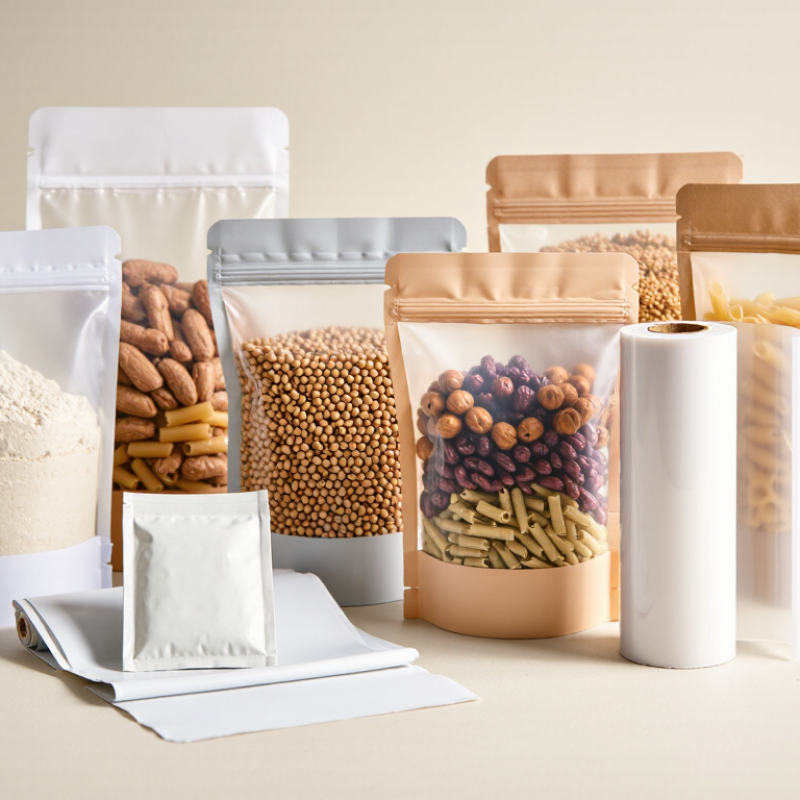
Top Dry Food Packaging Manufacturers for Global Buyers

Understanding Dry Food Packaging and Its Applications

Dry food packaging protects products such as rice, oats, pasta, nuts, and powdered ingredients from moisture, oxygen, light, and handling damage. These foods differ, so one package design rarely suits every product. Crisp cereal may lose texture after exposure to humid air, while ground spices can lose aroma through poor seals. Small details matter. A tight closure and a reliable seal can help preserve quality after a package leaves the filling line.

Common formats include flexible pouches, paper-based bags, cartons, and rigid containers. Their performance depends on the product, storage conditions, transport distance, and how quickly customers use the contents. A packaging team may assess barrier properties, seal strength, and filling-line compatibility using the actual food and package. Numbers on a material specification are useful, but real handling can reveal weak points. It is easy to focus on barrier ratings and overlook whether someone can close the pouch securely. There is no perfect pack. Better choices balance product protection, convenience, material use, and practical disposal options, without assuming one feature solves every concern.

Common Packaging Materials and Formats for Dry Foods

Dry foods need packaging that limits moisture, oxygen, light, and handling damage. The right barrier depends on the product. Crisp cereal can lose its crunch after a small seal failure, while flour mainly needs protection from dampness and pests. Packaging decisions should start with shelf-life targets, filling conditions, and expected transport—not appearance alone.

Common materials include polyethylene and polypropylene films, which can provide moisture resistance and reliable heat seals. PET adds strength and print clarity, while foil or metallized layers can improve light and oxygen protection. Paper gives a natural look and useful stiffness, but often needs an inner barrier layer. That extra layer can complicate recycling. Claims about recyclability also depend on local collection systems, so they deserve careful checking.

Formats range from pillow bags and stand-up pouches to cartons with inner liners, gusseted sacks, and larger bulk bags. A resealable pouch helps households use nuts or grains over several days. Cartons stack neatly, though they need a liner to protect many dry foods. For automated packing, film thickness and seal consistency matter; a package that looks suitable may still wrinkle or leak on a fast line. Testing under real storage conditions is useful. It is not perfect, but it can reveal weaknesses before shipment.

Top Dry Food Packaging Manufacturers for Global Buyers - Common Packaging Materials and Formats for Dry Foods

Packaging format Common material structure Typical dry-food applications Packaging characteristics Buyer considerations
Flat or pillow pouch Flexible film, such as PET/PE or printed BOPP/CPP Snack foods, crackers, powdered mixes, confectionery Lightweight format that can be heat-sealed; barrier performance depends on the film layers and any added barrier coating. Confirm seal strength, pack size, product protection needs, and compatibility with the filling equipment.
Stand-up pouch Multilayer flexible film, commonly PET/PE or PET/metallized PET/PE Dried fruit, nuts, granola, coffee, pet treats Stands upright on shelves; may include a zipper, tear notch, or clear window. Check zipper performance, headspace, filling-line requirements, and whether the structure suits local recycling systems.
Paper bag with barrier lining Paper outer layer with a PE, coated-paper, or other food-contact liner Flour, sugar, baking ingredients, cereals, dry mixes Paper provides a printable outer surface; the liner can help limit moisture exposure and product leakage. Specify the required moisture barrier, closure method, food-contact compliance, and whether the layers can be separated for disposal.
Metallized-film laminate pouch Printed PET or BOPP laminated to metallized PET and a heat-seal layer Chips, powdered beverages, seasonings, dry snacks The metallized layer can improve light, oxygen, and moisture protection compared with many uncoated films. Performance varies by construction; request barrier data and verify that the laminate meets the product’s shelf-life requirements.
Aluminum-foil laminate pouch Structure may include PET/aluminum foil/PE or other sealant layers Specialty coffee, sensitive powdered foods, high-value dry ingredients Aluminum foil provides a strong barrier to light, moisture, and oxygen when the package and seals remain intact. Assess puncture resistance, seal quality, cost, and end-of-life options; foil laminates are generally difficult to recycle through standard flexible-film streams.
Paperboard carton with inner bag Folding paperboard carton with a flexible plastic or paper-based inner liner Breakfast cereal, pasta, crackers, dry baking products The carton offers a printable, stackable outer pack, while the inner bag helps contain and protect the food. Review carton strength, liner barrier needs, opening and reclosing features, and separation instructions for disposal.
Rigid plastic jar or canister Usually PP or HDPE body with a compatible lid; an induction or foil seal may be added Powdered supplements, spices, drink mixes, snack products Provides a rigid container that can be resealed; wall thickness and closure design affect protection and durability. Check neck finish, closure fit, tamper evidence, transport efficiency, and local acceptance of the selected resin.
Woven bulk sack Woven polypropylene fabric, sometimes with a PE liner or laminated coating Bulk grains, pulses, flour, animal feed, and other dry ingredients Designed for handling and transport in larger pack sizes; liners or coatings can add protection against moisture and sifting. Specify safe working load, stitching and closure details, liner requirements, and applicable food-contact or transport standards.

Material structures and barrier levels vary by supplier and specification. Buyers should confirm food-contact compliance, product-specific shelf-life requirements, filling-line compatibility, and disposal guidance for each target market.

How Global Buyers Evaluate Packaging Manufacturers

Global buyers should judge a dry food packaging manufacturer by repeatable evidence, not a glossy sample. Ask for food-contact declarations, material specifications, and batch traceability records. Check whether the film or pouch suits the product’s oil content, particle size, and expected storage conditions. A crisp seal matters. So does easy opening; customers may reject a pack that tears unevenly.

Request test data for seal strength, oxygen and moisture barriers, and print rub resistance where relevant. Ask how results are recorded and linked to production lots. One good roll proves little. Arrange a pilot run on the intended filling line, using the actual product when practical. Watch for slipping film, dusty seal areas, uneven pouch dimensions, and jams at normal line speed.

Compare lead-time promises with written capacity and plans for material delays. Check minimum order quantities, revision control, and how complaints are investigated. A useful supplier shares corrective-action reports, not just apologies. Still, complete paperwork does not guarantee consistent factory practice. Visit the site or arrange an independent audit when the order size justifies it. Keep a retained sample from each approved batch; this simple habit is easy to overlook, even on experienced teams.

Leading Dry Food Packaging Manufacturers by Region

Dry food packaging manufacturers differ by region because materials, filling speeds, and distribution conditions differ. In Asia-Pacific, suppliers often serve high-volume snack, rice, noodle, and powdered-food lines, where flexible pouches and reliable sealing are practical priorities. Grand View Research’s Food Packaging Market report estimated that Asia-Pacific held 38.4% of global food-packaging revenue in 2023. This broader category is not a dry-food-only measure, but it signals the region’s manufacturing scale. Details still vary.

European manufacturers often emphasize recyclable structures, clear material specifications, and precise barrier performance. Buyers should ask for oxygen- and moisture-transmission data, not rely on phrases such as “high barrier.” North American suppliers commonly offer a wide range of bag, pouch, and carton formats, with strong attention to automated filling compatibility. The Flexible Packaging Association’s 2024 State of the Industry report put U.S. flexible-packaging sales at about $42.9 billion in 2023. That figure spans many end uses, so it is useful context, not a dry-food sales estimate.

Compare suppliers using the same test conditions: product type, shelf-life target, seal strength, and shipment route. A pouch that performs well in a cool warehouse may fail after humid, long-distance transport. These regional patterns are useful, but not rules; request samples and trial them on your own line.

Top Dry Food Packaging Manufacturers for Global Buyers

Regional buyer-market context, using population as a broad demand proxy—not a count or ranking of manufacturers.

Population figures are rounded 2024 estimates. Population indicates potential market scale, but does not measure dry food packaging demand or manufacturing capacity.

Comparing Suppliers for International Procurement

International buyers should compare dry food packaging suppliers by more than quoted unit price. Ask for material specifications, seal-strength data, and test results for the intended product. A pouch holding roasted grains may need different moisture protection than one used for powdered ingredients. Request samples in the actual fill size, then check seal consistency, print alignment, and handling damage. Small details matter. Confirm production capacity, lead times, minimum order quantities, and how delays are communicated.

Documentation also deserves close review. Check whether supplier records identify material layers, batch traceability, and stated food-contact suitability for your market. Requirements vary by destination, so verify claims with qualified local advisers rather than assume one document covers every country.

Ask how specifications are controlled after approval, especially when raw materials or production sites change. Ask for evidence. Compare shipping terms, transit packaging, and defect-resolution processes before placing a large order.

Sample quality may exceed routine production, and a single inspection can miss variation. Independent pre-shipment checks can reduce uncertainty, though they add time and cost.

FAQS

What does dry food packaging protect against?

It helps limit moisture, oxygen, light, and handling damage. A loose seal can soften crisp cereal.

Which packaging materials are commonly used?

Polyethylene and polypropylene films often resist moisture and seal with heat. PET can add strength and clear printing.

Does paper packaging protect food on its own?

Paper provides stiffness and a natural appearance, but many foods need an inner barrier. That layer may complicate recycling.

Which package works well for nuts or grains at home?

A resealable pouch can help keep contents usable over several days. The closure still needs to seal properly.

Why might cereal need a different package from flour?

Cereal can lose its crunch after a small seal failure. Flour mainly needs protection from dampness and pests.

Are cartons suitable for dry foods?

Cartons stack neatly, but many products need an inner liner for protection. More convenient, not automatically better.

What should teams test before choosing a package?

They can check barrier performance, seal strength, and filling-line compatibility with the actual food. Test real storage conditions, too.

Does a good barrier rating guarantee a reliable package?

No. A pouch may wrinkle or leak on a fast packing line, despite promising material figures. Numbers miss things.

Conclusion

Choosing the right Dry Food Pack solution involves more than selecting a bag or box. Packaging must suit the food’s characteristics, protect freshness, withstand storage and transport, and communicate product information clearly. Common options include flexible pouches, laminated bags, paper-based packs, cartons, and rigid containers. Each format offers different benefits in barrier performance, durability, convenience, and material use, so buyers should match the design to the product and its supply chain.

When evaluating manufacturers, global buyers can compare production capabilities, quality-control systems, customization options, communication, lead times, and shipping support. Suppliers across different regions may vary in scale, expertise, and service, making direct comparisons useful before procurement decisions are made. A clear assessment of specifications, sample quality, pricing, and delivery expectations can help buyers identify a dependable partner and choose packaging that performs consistently from production through distribution.

Oliver

Oliver

Oliver is a seasoned marketing professional with a wealth of expertise in driving brand awareness and engagement. With a deep understanding of our company's product offerings, he consistently delivers high-quality content that enriches our professional blog. His insights not only shed light on......