China has become a major sourcing center for dry fruit packaging, but choosing a manufacturer requires more than comparing prices. The right partner should understand moisture control, oxygen barriers, seal strength, food-contact materials, and transport conditions. A glossy pouch means little if raisins become sticky during shipping.
Dr. Susan Selke, a respected packaging researcher, has often emphasized that “packaging is a system, not merely a container.” This principle fits Dryfruits Packaging especially well. A reliable manufacturer should connect material selection with product freshness, filling equipment, warehouse humidity, and retail display. It should also provide test records, material specifications, production samples, and clear quality procedures. Claims should be checked, not simply accepted.
This guide examines leading Chinese Dryfruits Packaging manufacturers through practical criteria. These include manufacturing experience, product customization, barrier performance, printing quality, factory consistency, certifications, and export service. Some suppliers specialize in stand-up pouches. Others focus on paper boxes, vacuum bags, jars, or gift packaging. The strongest companies usually offer several formats without losing process control.
Still, no supplier is perfect. Even an experienced factory may have communication gaps, delayed samples, or inconsistent color matching. That matters. Buyers should request pilot orders, inspect sealing edges, and test packages under realistic storage conditions. A factory visit can reveal more than a polished catalog. This comparison aims to provide useful direction, while recognizing that supplier performance can change over time. Careful verification remains essential before signing a long-term packaging agreement.
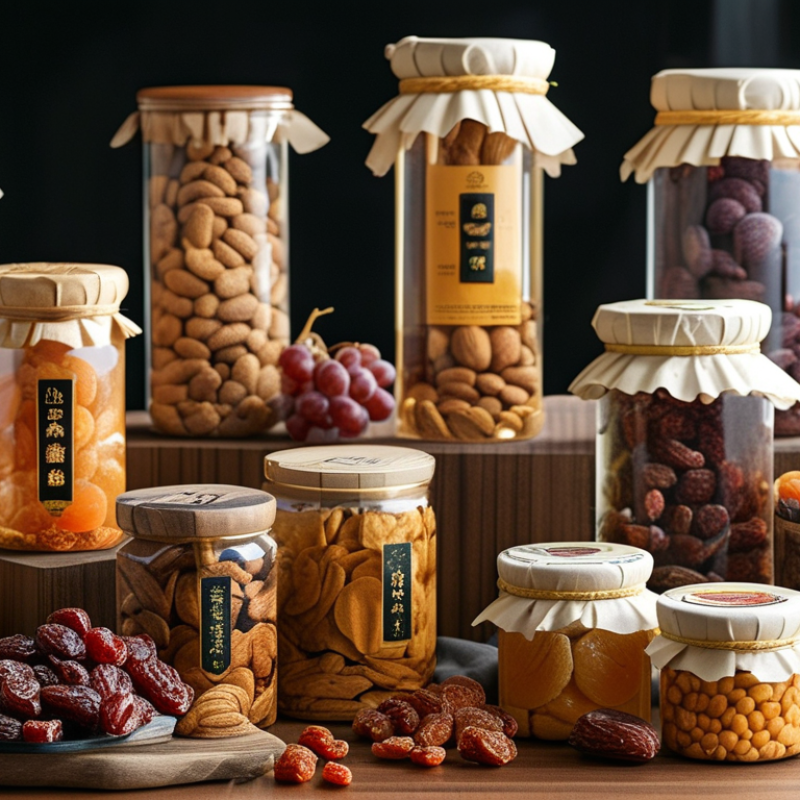
China’s dry-fruit packaging market expanded steadily in 2023, supported by e-commerce, gift sales, and rising demand for resealable pouches. Public estimates vary because some reports include nuts, seeds, and confectionery packaging. A practical industry estimate places the market near US$1.5–1.8 billion, with an expected CAGR of about 5%–7% through 2028.
Export activity remained important. China shipped flexible pouches, laminated films, cartons, and plastic containers to many food-processing markets. Available trade data suggests packaging-related exports exceeded US$10 billion in 2023, although dry-fruit packaging is rarely separated as its own customs category. This limitation matters. A supplier claiming exact niche figures may be simplifying the data. The strongest manufacturers usually offer moisture barriers, oxygen-control films, zipper closures, and small-batch printing. They also provide migration tests, seal-strength reports, and traceable production records.
Tips: Ask for 2023 production evidence, not only a sales brochure. Request samples filled with oily nuts and dried mango. Check seal performance after transport simulation. Confirm food-contact compliance for your destination market. A lower quote can hide thicker film, weak zippers, or inconsistent color control. I would compare at least three factories before deciding. Factory audits are still useful, but they do not replace independent testing.
| Data Dimension | 2023 Data Point | Unit / Basis | Market Interpretation | Data Status | Reference Source |
|---|---|---|---|---|---|
| Standalone China dry-fruit packaging market size | Not separately published | RMB or USD | Public statistical systems do not provide a dedicated market-size series for packaging used exclusively for dried fruits. Packaging revenue is normally reported by material or packaging type rather than by food category. | No official standalone figure | China National Bureau of Statistics; China Packaging Federation statistical classifications |
| Standalone market CAGR for dry-fruit packaging | Not calculable from official data | 2023 CAGR | A defensible CAGR requires at least two comparable annual market-size observations. Since the dry-fruit packaging segment is not separately reported, a precise segment CAGR would be an estimate rather than an official statistic. | Methodologically unavailable | China National Bureau of Statistics; China Packaging Federation |
| Relevant customs product category for dried fruit | HS 0813 | Harmonized System heading | HS 0813 covers fruit and nuts, provisionally preserved, dried, or mixed. It is useful for tracking dried-fruit trade, but it does not identify the packaging materials used for those products. | Official classification | World Customs Organization Harmonized System; General Administration of Customs of China |
| Standalone exports of dry-fruit packaging | Not separately identifiable | Export value or volume | Flexible pouches, paper bags, cartons, glass containers, metal tins, and plastic containers are classified under different packaging or material codes. Customs data cannot reliably isolate packaging sold specifically for dried-fruit applications. | No dedicated customs code | General Administration of Customs of China; UN Comtrade trade classification system |
| Dried-fruit export proxy | HS 0813 export series required | USD value, tonnes, destination, and year | For export-market analysis, the appropriate approach is to extract China’s HS 0813 exports for 2023 and compare them with earlier years. This measures dried-fruit trade, not packaging exports. | Use trade-data extraction | UN Comtrade Database; International Trade Centre Trade Map; General Administration of Customs of China |
| Packaging-material proxy categories | Paper and paperboard; plastic; glass; metal; flexible laminates | Material-based market segmentation | These categories are more suitable for sizing the addressable packaging market because official packaging statistics generally classify products by material, structure, or manufacturing process. | Suitable proxy framework | China Packaging Federation; National Bureau of Statistics of China; relevant HS chapters 39, 48, 70, and 76 |
| Common dry-fruit packaging formats | Stand-up pouches, flat pouches, pillow bags, rigid jars, cartons, tins, and multipacks | Product-format segmentation | Format selection depends on oxygen and moisture barriers, resealability, shelf-life requirements, retail channel, filling equipment, and shipment distance. | Industry-standard segmentation | Packaging format definitions used in food-packaging specifications and international packaging trade practice |
| Key technical requirements | Moisture barrier, oxygen barrier, light protection, seal integrity, and food-contact compliance | Performance criteria | These requirements are more relevant than nominal package size when comparing qualified suppliers for dried-fruit applications. | Technical benchmark | GB 4806 series for food-contact materials and products; ISO 11607 packaging principles where applicable |
| Recommended supplier-comparison dimensions | Material structure, minimum order quantity, lead time, printing process, barrier test results, food-contact documentation, and export capability | Procurement scorecard | A supplier ranking should be based on documented capability and compliance rather than on an unverified market-share claim, because China does not publish a dedicated ranking of dry-fruit packaging manufacturers. | Recommended evaluation basis | GB food-contact standards; supplier qualification practices for packaged foods |
: Practical estimates place it near US$1.5–1.8 billion. The figure varies because some reports include nuts, seeds, and confectionery packaging.
The market may grow about 5%–7% annually. Actual growth could differ because public market categories are inconsistent.
Packaging-related exports exceeded US$10 billion in 2023. Dry-fruit packaging is rarely listed separately in customs data. Exact niche figures deserve careful checking.
Moisture barriers help protect texture and freshness. Oxygen-control films can reduce quality loss. Zipper closures support repeated opening. Small-batch printing may suit seasonal products.
Request recent production records, test reports, and traceable material information. Ask for samples filled with oily nuts and dried mango. A sales brochure is not enough.
Request separate prices for 5,000, 10,000, and 50,000 units. Include tooling, plate charges, and leftover stock. Match the order size to your sales forecast. The cheapest quote may create hidden waste.
Samples may take 7–15 days. Mass production may require 20–35 days. Confirm artwork approval, tooling, material sourcing, and shipping separately. Unclear artwork often causes delays.
Request food-contact declarations and recent independent test reports. Check migration, seal strength, oxygen transmission, and water vapor transmission. Food-safety certification supports controls but does not prove every package fits oily fruit.
Check pouch dimensions, zipper type, matte finish, and print tolerance. Request drop-test evidence. Test filled bags after heat, stacking, and transport. Laboratory results may differ from warehouse performance. Testing is imperfect, but skipping it is worse.
This article explores China’s Dryfruits Packaging market by outlining its 2023 market scale, growth trends, compound annual growth rate, and export performance. It explains how buyers can assess manufacturers that follow GB 4806 food-contact safety requirements, including the importance of material traceability, production controls, testing, and documentation. The discussion also highlights how five-layer laminated structures can improve resistance to moisture, oxygen, light, puncture, and seal failure, helping preserve the quality and shelf life of dried fruit products.
A practical comparison framework is provided for evaluating suppliers according to annual production capacity, revenue range, export share, and consistency of delivery. The article further examines key purchasing factors such as minimum order quantity, lead time, certification validity, printing options, bag structures, dimensions, sealing methods, and customization support. By combining market analysis with technical and commercial criteria, readers can make more informed decisions when selecting reliable Chinese packaging partners.

 DongFa Printing