Finding the top Freeze Dried Packaging suppliers worldwide requires more than comparing prices or glossy product catalogs. Freeze-dried foods and ingredients need packaging that protects against moisture, oxygen, light, and physical damage. A weak seal can ruin crisp texture within hours. That detail matters.
Reliable suppliers usually provide high-barrier films, foil laminates, rigid containers, or custom pouches for different products. Their experience should cover filling lines, transportation conditions, storage periods, and retail handling. Look for measurable specifications, including oxygen transmission rate, water vapor transmission rate, seal strength, and puncture resistance. These figures help buyers compare performance with greater confidence.
Supplier credibility also depends on traceability and communication. Ask for material documentation, production samples, quality records, and realistic lead times. A capable partner should explain whether packaging supports nitrogen flushing, vacuum packing, desiccants, or automated sealing. Regional manufacturing capacity can influence shipping costs and continuity. It should not be the only deciding factor.
Independent testing helps.
This guide examines international suppliers through a practical purchasing lens. It considers product quality, customization, minimum order quantities, technical support, certifications, and customer experience. However, supplier rankings are never completely objective. A small specialist may outperform a large manufacturer for one application, while offering limited capacity elsewhere. That limitation deserves attention.
The strongest choice depends on the product, climate, shelf-life target, and filling process. Buyers should validate claims with samples and controlled trials before signing a large contract. Packaging can look excellent on paper. Real performance is what counts.
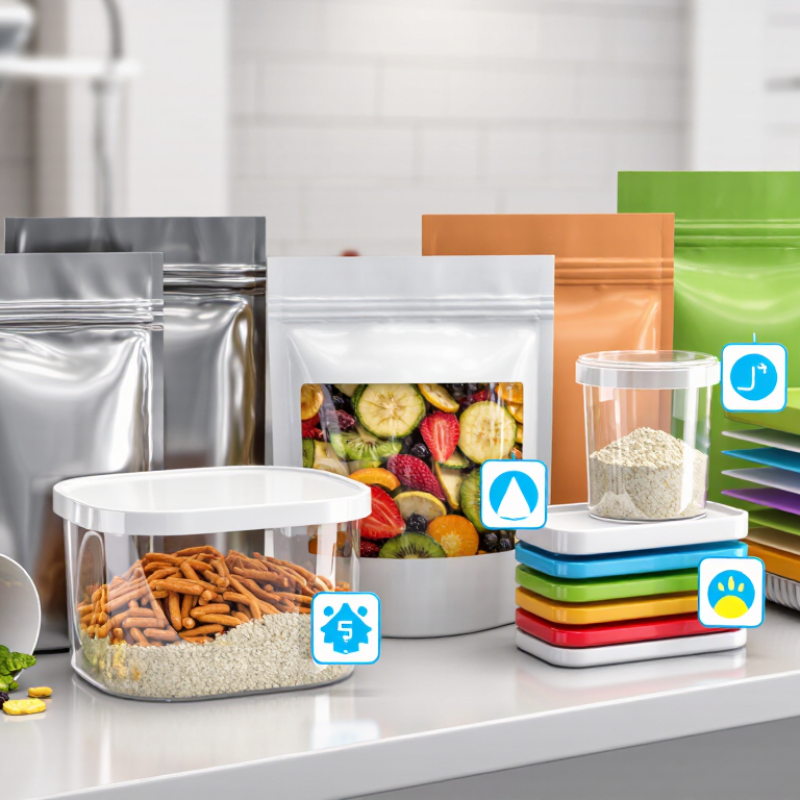
Freeze-dried products contain very little moisture, but their porous structure absorbs humidity quickly. Packaging must protect texture, flavor, nutrients, and shelf stability during storage and transport. Common formats include high-barrier pouches, sachets, trays, and sealed containers. Effective materials limit water vapor, oxygen, and light exposure. A strong seal matters as much as the film itself. Even a tiny channel leak can soften a crisp product within days.
Supplier selection affects more than purchase price. Experienced suppliers should provide barrier data, seal-strength results, migration information, and lot traceability. Ask for water vapor transmission and oxygen transmission values under relevant test conditions. Confirm that the package runs smoothly on your filling equipment. A material can perform well in a laboratory but wrinkle, split, or seal poorly on a fast production line.
Practical testing reveals details that specifications may miss. Check seals after vibration, compression, temperature changes, and repeated opening. Inspect the inner surface for powder buildup near the seal area. Request samples from several production lots, not one attractive sample. A supplier should explain quality controls clearly and respond with evidence. The process is rarely perfect. A package may pass initial tests yet fail after long transport, so shelf-life studies should reflect real handling conditions. Supplier transparency becomes essential when packaging changes unexpectedly.
Freeze-dried products depend on packaging that controls moisture, oxygen, light, and physical shock. Type I borosilicate glass vials remain common for injectable products because they offer strong chemical resistance and dimensional stability. Elastomeric stoppers create the flexible seal, while aluminum overseals protect the closure during transport. For food and nutraceutical products, multilayer films often combine polyethylene, polyester, and aluminum foil. These structures provide useful moisture and oxygen barriers, although they can complicate recycling.
Smithers’ 2024 packaging outlook projects global packaging demand to exceed US$1 trillion by 2028. That scale increases pressure to reduce material use without weakening protection. High-barrier polymer containers, including cyclic olefin polymers, can reduce breakage and lower package weight. However, glass still performs reliably under demanding sterilization conditions. The better choice depends on product sensitivity, filling temperature, and distribution risks.
Packaging technology is becoming more measurable. Vacuum-assisted sealing, nitrogen flushing, and automated leak detection help limit oxygen exposure. Container closure integrity testing can identify microscopic leaks that visual inspection misses. ASTM and USP testing practices are widely used for this purpose. MarketsandMarkets’ 2024 pharmaceutical packaging analysis identifies sustainability and smart inspection as major growth drivers, but practical results vary between facilities. A lighter package is not automatically safer. That assumption needs testing. In real operations, stopper fit, seal compression, warehouse humidity, and rough handling can matter as much as the material itself.
Top Freeze Dried Packaging Suppliers Worldwide
How to Evaluate Freeze-Dried Packaging Suppliers Worldwide
Choosing a freeze-dried packaging supplier requires more than comparing prices. The package must resist oxygen, moisture, light, and rough handling during transport. Ask for barrier-performance data, seal-strength results, and material specifications. A reliable supplier should explain testing methods clearly. Vague answers deserve caution. Request production samples, then inspect seals after filling and storage. Small leaks may appear only after temperature changes.
Tips: Check the supplier’s quality certifications, traceability system, and complaint process. Confirm minimum order quantities, lead times, tooling fees, and export documents. Test packaging with your actual product, not only an empty pouch. Independent laboratory checks can reveal weaknesses that supplier samples miss. Also review recycled-content claims carefully. They may sound impressive but lack useful evidence.
A strong supplier can provide batch records, retained samples, and corrective-action reports. Visit the facility when possible, or arrange a live video audit. Observe cleanliness, warehouse conditions, and seal inspection procedures. Packaging should remain stable from factory dispatch to final storage. Ask how materials perform in humid warehouses and long-distance shipping. I have found that polished presentations do not always reflect daily production discipline. That is an uncomfortable lesson. Build a scorecard covering quality, communication, capacity, and risk. Reassess suppliers after each trial order. Performance can change.
Top Freeze Dried Packaging Suppliers Worldwide?
Major Supplier Regions and Their Manufacturing Strengths
North American suppliers often lead in high-barrier packaging and automated filling systems. Their facilities commonly use multilayer films, rigid jars, and precision sealing equipment. These solutions help protect freeze dried foods from oxygen, moisture, and light. Supplier audits should examine seal strength, material traceability, and production consistency. Documentation is usually detailed, but lead times can be longer for customized formats.
European manufacturers are known for process control, recyclable material development, and strict quality management. Many plants produce lightweight pouches, recyclable films, and carefully engineered closures. Their laboratories often test oxygen transmission, water vapor resistance, and shelf-life performance. The paperwork can be impressive. Still, documentation does not always reveal how materials perform after rough transport or repeated warehouse handling.
East Asian production centers offer strong capabilities in film converting, printing, injection molding, and large-scale assembly. They can support flexible packaging, small sachets, and customized container shapes. Several regions also provide competitive tooling and rapid sampling. Southeast Asian suppliers are expanding in laminated films and contract packaging, while South Asian facilities are growing in flexible packaging and pharmaceutical-grade production. Price comparisons can be misleading. Lower unit costs may hide higher inspection, freight, or tooling expenses. A practical evaluation should include factory capacity, backup equipment, moisture-barrier data, and sample testing under realistic storage conditions. Supplier selection is rarely perfect. Requirements often change after the first trial.
| Major Supplier Region | Typical Manufacturing Strength | Common Freeze-Dried Product Segments | Common Packaging Formats | Typical Barrier Solutions | Automation and Quality Capability | Export and Supply-Chain Advantages |
|---|---|---|---|---|---|---|
| North America | High-value flexible packaging, rigid containers, contract packing, and packaging systems for regulated food, nutrition, and pharmaceutical applications. | Instant beverages, camping meals, fruit and vegetable ingredients, probiotics, nutraceuticals, and sterile or highly sensitive products. | High-barrier pouches, sachets, stick packs, jars, bottles, trays, and portion packs. | Multi-layer foil laminates, metallized films, high-barrier plastic films, induction-sealed closures, and oxygen-absorber-compatible structures. | High | Strong validation practices, established cold-chain and dry-goods logistics, and broad access to North American food and healthcare markets. |
| Western Europe | Premium sustainable packaging, precision converting, pharmaceutical packaging, and highly controlled filling and sealing operations. | Specialty coffee, dairy cultures, infant and clinical nutrition, premium foods, botanical ingredients, and pharmaceutical products. | Recyclable mono-material pouches, sachets, glass containers, aluminum-based packs, blister formats, and small-dose packaging. | High-barrier recyclable films, aluminum laminates, coated paper structures, glass, and tightly controlled heat-seal systems. | High | Strong regulatory infrastructure, advanced packaging engineering, proximity to major European distribution networks, and emphasis on recyclability. |
| East Asia | Large-scale film production, high-speed pouch conversion, precision forming, electronics-enabled inspection, and cost-efficient mass manufacturing. | Instant foods, coffee, tea, fruit snacks, seafood, functional foods, pet food, and pharmaceutical or laboratory materials. | Stand-up pouches, flat pouches, sachets, stick packs, vacuum-compatible bags, aluminum cans, and custom-formed containers. | Aluminum foil laminates, metallized polyester films, polyethylene sealant layers, coated films, and high-barrier multilayer structures. | High | Extensive raw-material capacity, competitive conversion costs, broad format flexibility, and strong ocean-freight connectivity. |
| South Asia | Flexible packaging conversion, printed laminates, small and medium production runs, and cost-competitive packaging for food and nutraceutical products. | Spices, instant meals, fruit powders, dairy ingredients, herbal products, nutraceuticals, and specialty agricultural products. | Printed pouches, sachets, pillow bags, stand-up bags, jars, and laminated bags with zipper or tear-notch features. | Foil laminates, metallized films, polyester and polyethylene combinations, and moisture-resistant sealant layers. | Medium to High | Competitive labor and conversion costs, strong regional agricultural supply chains, and growing export capacity for packaged ingredients. |
| Latin America | Flexible packaging for food ingredients, coffee, fruit, dairy, and meat products, supported by regional resin conversion and printing capacity. | Coffee, tropical fruit, vegetables, meat snacks, dairy cultures, sauces in powder form, and emergency or outdoor foods. | High-barrier pouches, sachets, vacuum bags, gusseted bags, jars, and bulk liners. | Metallized films, foil laminates, moisture-barrier polyethylene structures, and oxygen-control packaging where required. | Medium to High | Close access to agricultural and food-processing sources, established regional food-packaging markets, and convenient trade links with North America. |
| Middle East and Africa | Growing flexible packaging capacity, import-supported converting, and packaging for shelf-stable foods exposed to hot and dry distribution conditions. | Dates, fruit, coffee, tea, spices, humanitarian foods, meat products, and nutraceutical ingredients. | Stand-up pouches, sachets, laminated bags, bulk bags, jars, and heat-sealed portion packs. | UV-resistant films, foil laminates, metallized films, strong moisture barriers, and heat-resistant sealant layers. | Medium | Strategic access to Europe, Asia, and African markets; demand is supported by long shelf-life requirements and ambient distribution. |
| Oceania | Specialty food packaging, premium agricultural products, short-run customization, and packaging designed for long-distance export. | Meat, seafood, dairy ingredients, berries, vegetables, outdoor meals, pet food, and premium health products. | High-barrier pouches, vacuum-compatible bags, sachets, jars, trays, and bulk export liners. | Foil laminates, metallized films, oxygen and moisture barrier structures, and robust seal systems for extended transport. | Medium to High | Strong food-safety culture, premium raw-material positioning, and experience with long-distance shipping to Asian and global markets. |
Top Freeze Dried Packaging Suppliers Worldwide?
Quality begins with barrier performance, not glossy samples. Freeze-dried products quickly absorb moisture, lose texture, and oxidize after opening. Suppliers should provide tested oxygen transmission rate, water vapor transmission rate, seal strength, and drop resistance. In practical audits, small seal wrinkles often reveal larger process problems. Packaging should also support traceability, batch control, and consistent filling speeds. FAO reports that 13.2% of food is lost between harvest and retail. Reliable packaging can reduce avoidable deterioration, although it cannot repair poor storage conditions.
Compliance requires documented food-contact materials, migration testing, allergen controls, and change notifications. Requirements may include U.S. food-contact rules, European Framework Regulation 1935/2004, and recognized quality systems such as ISO 22000. Suppliers should explain which tests apply to each market. Sustainability is less simple than choosing paper. The OECD’s Global Plastics Outlook reports that only 9% of plastic waste was recycled globally in 2019. A thinner mono-material pouch may reduce material use, but it can fail barrier targets. That trade-off deserves honest review.
Tips: Request recent laboratory reports, not marketing claims. Compare total cost per protected serving, including rejects, freight, and shelf-life losses. Ask for pilot samples under realistic humidity and temperature conditions. Sustainability goals also need measurable evidence, such as recycled content, certified sourcing, or verified life-cycle data. Cost estimates can be imperfect; energy prices, minimum order quantities, and regional compliance fees change quickly. A supplier that discloses limitations may be more dependable than one promising everything.
Its porous structure absorbs humidity quickly. High-barrier materials help protect crisp texture, flavor, nutrients, and shelf life.
Common options include pouches, sachets, trays, and sealed containers. The best format depends on product sensitivity and handling conditions.
They should limit water vapor, oxygen, and light. Physical protection also matters during compression, vibration, and transport.
A tiny leak can soften a crisp product within days. Strong seals prevent hidden moisture entry.
Request barrier data, seal-strength results, migration information, and lot traceability. Test values should match actual storage conditions.
No. A material may work in testing but wrinkle, split, or seal poorly on fast equipment.
Test samples after vibration, compression, temperature changes, and repeated opening. Inspect powder near the seal area.
One attractive sample may hide variation. Several lots reveal whether quality stays consistent over time.
Not automatically. Lower weight may reduce protection, while multilayer structures can complicate recycling.
Vacuum sealing, nitrogen flushing, and leak detection can reduce oxygen exposure. They may still need real-world shelf-life testing.
Freeze Dried Packaging plays a vital role in protecting moisture-sensitive products, preserving quality, and extending shelf life throughout storage and transportation. This article explains how packaging solutions are designed for freeze-dried goods and why selecting the right supplier matters. It examines commonly used materials, including high-barrier films, foil laminates, rigid containers, desiccants, and specialized sealing technologies that help block moisture, oxygen, light, and contamination.
It also presents practical criteria for evaluating suppliers worldwide, such as manufacturing capacity, technical expertise, quality control, certifications, customization capabilities, lead times, and communication. Different regions may offer strengths in advanced materials, automated production, cost efficiency, or flexible small-batch manufacturing. In addition, buyers should assess regulatory compliance, product safety, sustainability initiatives, recyclability, supply-chain reliability, and total cost rather than focusing only on unit price. A balanced evaluation can help businesses select dependable packaging partners and achieve consistent product protection in diverse markets.

DongFa Printing